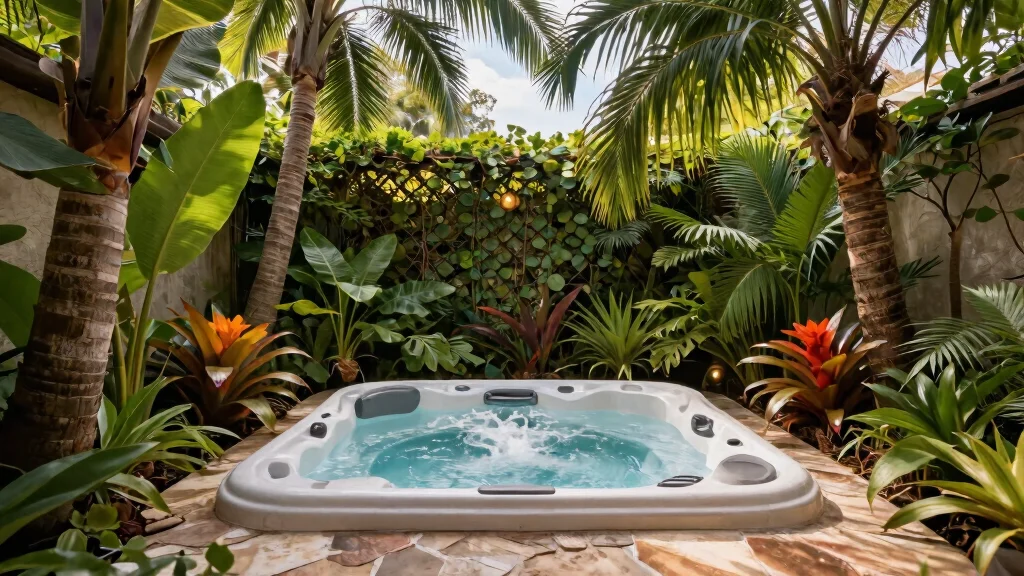
Creating a beautiful oasis around your hot tub transforms your outdoor space into a relaxing retreat. As the weather warms up, many of us crave the soothing experience of soaking in hot water surrounded by nature. That’s why I put together this guide on hot tub landscaping. It’s all about enhancing your outdoor aesthetics with vibrant greenery and clever design choices.
If you’re someone who loves gardening or simply wants to elevate your backyard experience, you’re in the right place. This post is for those who want to blend functionality with beauty, creating a serene spot where you can unwind and enjoy nature. From plant selection to garden design, I’ve gathered 11 essential tips that will help you create a backyard oasis that’s not only appealing but also low-maintenance.
You’ll learn how to choose the right plants, incorporate color, and create privacy. Each suggestion will inspire you to cultivate a space that invites relaxation and enjoyment. So, grab a cup of your favorite drink and let’s dive into these greenery tips for your hot tub landscaping!
Key Takeaways
– Choose the Right Foliage: Opt for tropical plants that thrive in your climate, adding lushness and texture to your hot tub area.
– Incorporate Colorful Blooms: Select flowering plants that will provide vibrant pops of color, enhancing the visual appeal of your garden design.
– Create Privacy with Tall Plants: Use tall, dense plants or trees to shield your hot tub from prying eyes, ensuring a secluded and intimate atmosphere.
– Select Low-Maintenance Plants: Look for hardy, drought-resistant plants that require minimal care, making landscape maintenance simple and hassle-free.
– Optimize Lighting for Evening Ambiance: Install soft lighting around your hot tub to create a cozy ambiance for evening relaxation, making your backyard feel inviting at night.
1. Choose the Right Foliage
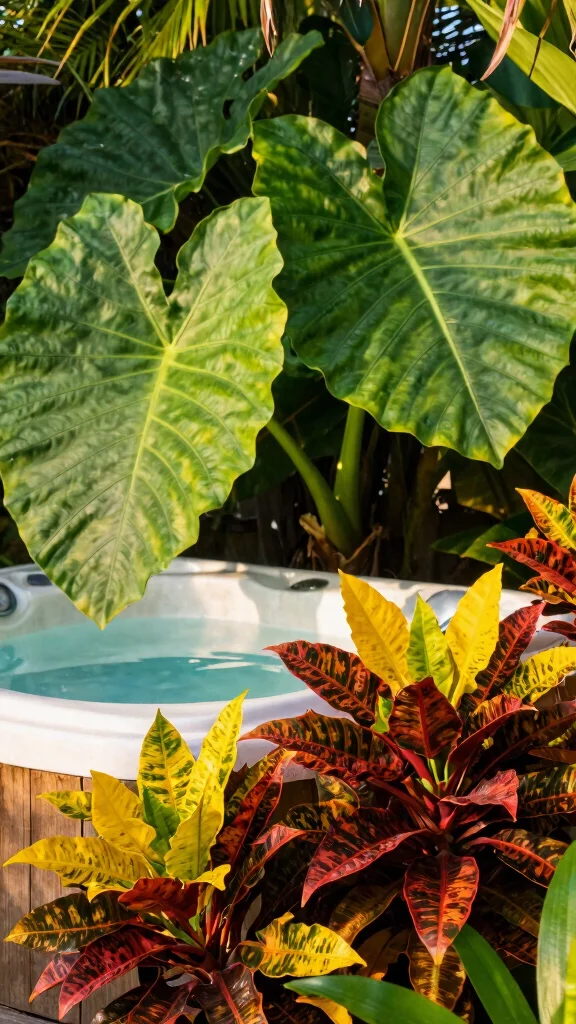
Choosing the perfect foliage can transform your hot tub area into a tropical paradise. Opt for plants that thrive in moist conditions and can handle occasional splashes from the water. Think about using Giant Elephant Ear plants for their broad, eye-catching leaves that create a lush vibe. Pair them with striking Alocasia or Philodendron varieties for height and drama, enhancing your space beautifully. Don’t overlook colorful options like Crotons that add vibrant yellows, reds, and oranges to your landscape.
Start by evaluating the sunlight and moisture levels in your space. Group plants with similar watering needs to make maintenance a breeze. Create layers with taller plants to provide privacy while adding a dynamic look to your hot tub retreat.
Key tips for selecting foliage:
– Choose plants tolerant of humidity and splashes
– Pair complementary colors for visual interest
– Group taller plants for privacy and depth
This thoughtful approach will create a stunning and relaxing environment around your hot tub, making every soak feel like a mini-vacation.
Top Varieties for Different Conditions
1. Bird of Paradise (Strelitzia reginae)
– Best conditions: Thrives in warm, humid climates with well-drained soil. Ideal for creating a tropical vibe around hot tubs.
– Key features: The striking orange and blue flowers resemble a bird in flight, adding a unique touch to your space. This plant can grow up to 5 feet tall, providing a stunning focal point.
– Considerations: Requires full sun and regular watering. It may not survive in colder areas, so consider growing it in pots that you can bring indoors during winter months.
2. Hibiscus (Hibiscus rosa-sinensis)
– Best conditions: Prefers warm climates with plenty of sunlight. Great for tropical-themed gardens.
– Key features: These large, colorful blooms last for several months, enhancing the outdoor aesthetics around your hot tub. The plant can reach heights of 4 to 10 feet, offering both beauty and privacy.
– Considerations: Needs well-drained soil and regular watering. It can be susceptible to pests, so keep an eye on it.
3. Bamboo (Bambusoideae family)
– Best conditions: Thrives in a range of climates but prefers moist, well-drained soil. Perfect for creating privacy around your backyard oasis.
– Key features: Bamboo grows quickly and can reach heights of 30 feet or more. It creates a natural screen and a serene atmosphere around your hot tub.
– Considerations: Some varieties can be invasive, so choose clumping types and monitor their growth to prevent spreading.
4. Plumeria (Plumeria spp.)
– Best conditions: Loves warm, sunny environments. Perfect for tropical gardens or areas with a hot/dry climate.
– Key features: Known for its fragrant flowers, plumeria adds a delightful scent to your outdoor space. It can grow up to 25 feet tall, making it a beautiful backdrop for your hot tub.
– Considerations: Requires well-drained soil and should be protected from frost. It may need extra care in cooler climates.
5. Croton (Codiaeum variegatum)
– Best conditions: Ideal for sunny, humid areas but can tolerate some shade. Works well as a colorful accent plant near hot tubs.
– Key features: Crotons display a kaleidoscope of colors, including greens, yellows, reds, and oranges. Their bushy shape makes them great for filling gaps in your garden design.
– Considerations: Needs regular watering and can be sensitive to extreme temperature changes.
6. Lavender (Lavandula spp.)
– Best conditions: Thrives in dry, well-drained soil and prefers full sunlight. Excellent for hot/dry climates.
– Key features: Lavender not only adds beauty with its lovely purple flowers but also fills the air with a calming fragrance. It attracts pollinators, enhancing the biodiversity of your garden.
– Considerations: Requires minimal watering once established. Too much moisture can cause root rot, so be cautious with irrigation.
7. Ornamental Grasses (Various species)
– Best conditions: Adaptable to many climates, these plants prefer full sun or partial shade and well-drained soil. Great for adding texture and movement around hot tubs.
– Key features: Ornamental grasses come in various heights and colors, creating a layered effect in your garden design. They sway beautifully in the wind, adding a dynamic element to your landscape.
– Considerations: Some varieties can be invasive, so research and choose non-invasive types. Regular maintenance is needed to keep them looking tidy.
Growing Tips:
– Water your plants regularly, especially during dry spells.
– Use mulch to retain moisture and suppress weeds around your hot tub area.
– Consider grouping plants with similar water and sunlight needs for easier maintenance.
Avoid:
– Don’t overcrowd your plants; give them space to grow and thrive.
– Avoid planting species that might attract pests or require excessive care in your local climate.
2. Incorporate Colorful Blooms
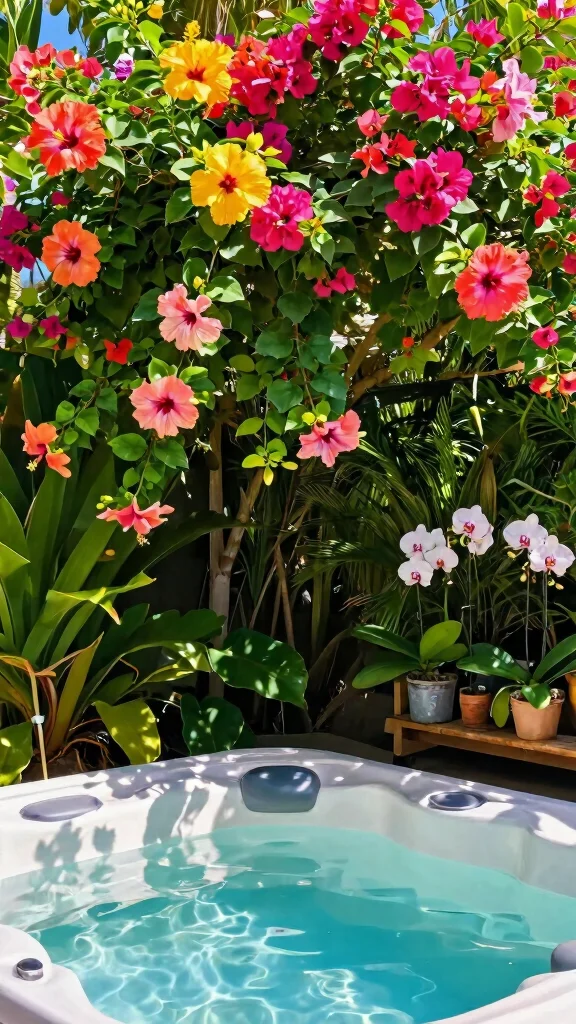
Brightening up your hot tub area with flowering plants can create an inviting and vibrant atmosphere. Consider adding Hibiscus and Bougainvillea, known for their vivid blooms in pinks, purples, and oranges, thriving beautifully in sunny spots. These flowers not only enhance the tropical feel but also bloom throughout summer, providing ongoing color. You might also want to use tropical orchids, either in hanging baskets or on shelves, adding elegance and visual appeal.
Mix plants with staggered bloom times for an ongoing display of color. Pair flowering plants with lush greenery to create a stunning contrast that captures attention. Installing trellises or arbors can also support climbing plants, giving you a vertical garden that maximizes space.
Ways to enhance your blooms:
– Select plants with varied bloom times for continuity
– Combine flowers with greenery for depth
– Use structures to support climbing varieties
This vibrant approach will invite beauty and life into your hot tub space, creating a serene escape for relaxation.
3. Create Privacy with Tall Plants
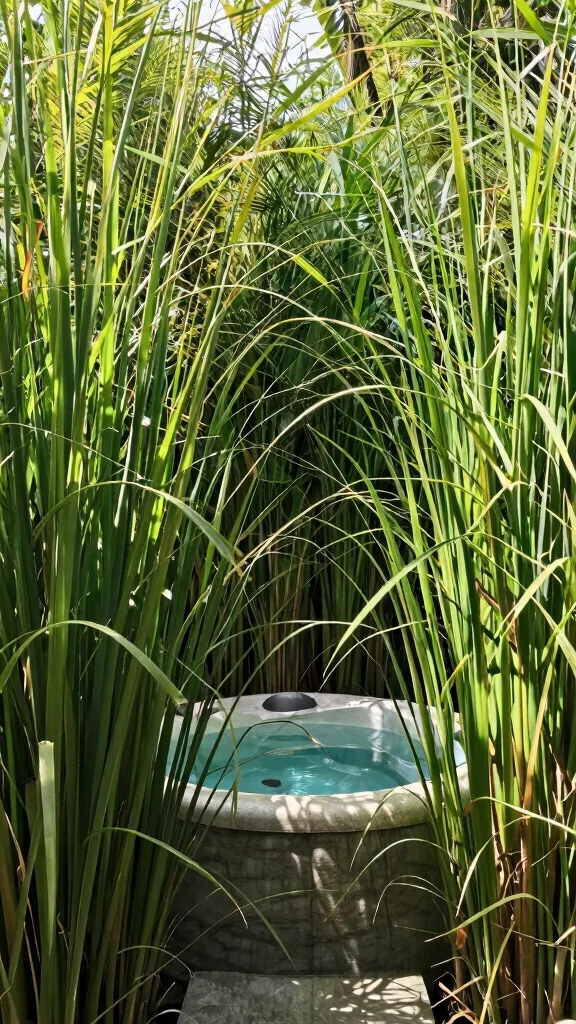
If privacy is a concern while enjoying your hot tub, tall plants can provide the perfect natural barrier. Consider using tropical grasses like Pampas Grass or Miscanthus, which grow tall and create a lush enclosure. For a more structured look, bamboo is a fantastic option, growing quickly and providing a beautiful backdrop for your oasis. Mixing these tall plants with shorter varieties can add dimension and depth to your landscape.
Choose non-invasive species to avoid unwanted spreading, ensuring your garden remains beautiful and manageable. Tall plants can also act as windbreaks, making your hot tub space cozier and more inviting.
Tips for enhancing privacy:
– Select non-invasive tall plants for a natural barrier
– Mix in shorter plants for visual interest
– Use planters for flexibility in height
This strategic planting will create a secluded haven around your hot tub, allowing for peaceful relaxation away from prying eyes.
4. Incorporate Water Features
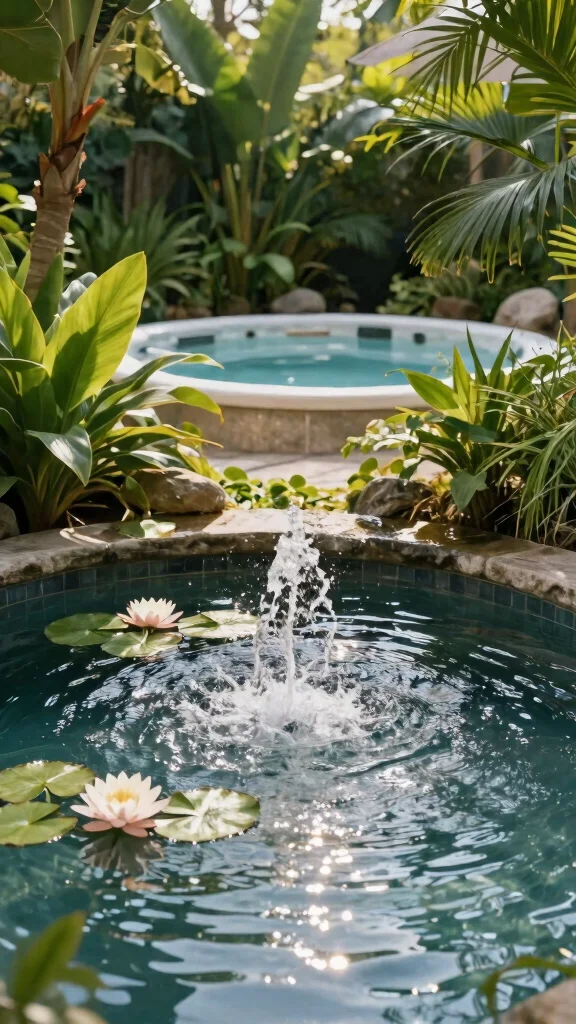
Adding a water feature close to your hot tub can elevate your outdoor experience to new heights. Consider a small fountain or pond that creates soothing sounds and a refreshing mist on warm days. Surrounding your water feature with plants like Water Lilies or Lotus flowers ties everything together beautifully and enhances the inviting atmosphere. Not only do these features add aesthetic value, but they also attract beneficial birds and insects to your garden.
Choose a low-maintenance water feature to simplify upkeep. The relaxing sound of flowing water can enhance your hot tub experience, making it even more enjoyable.
Key ideas for water features:
– Opt for low-maintenance designs for ease
– Surround with tropical plants for a lush look
– Use natural stones for a seamless fit in your landscape
This addition will create a peaceful environment, enhancing your relaxation time in the hot tub.
Fun fact: A compact fountain near your hot tub can cut surrounding noise by up to 8 dB and add refreshing mist on warm days. Pair it with Water Lilies or Lotus to unlock a lush, low-maintenance look that elevates hot tub landscaping.
5. Select Low-Maintenance Plants
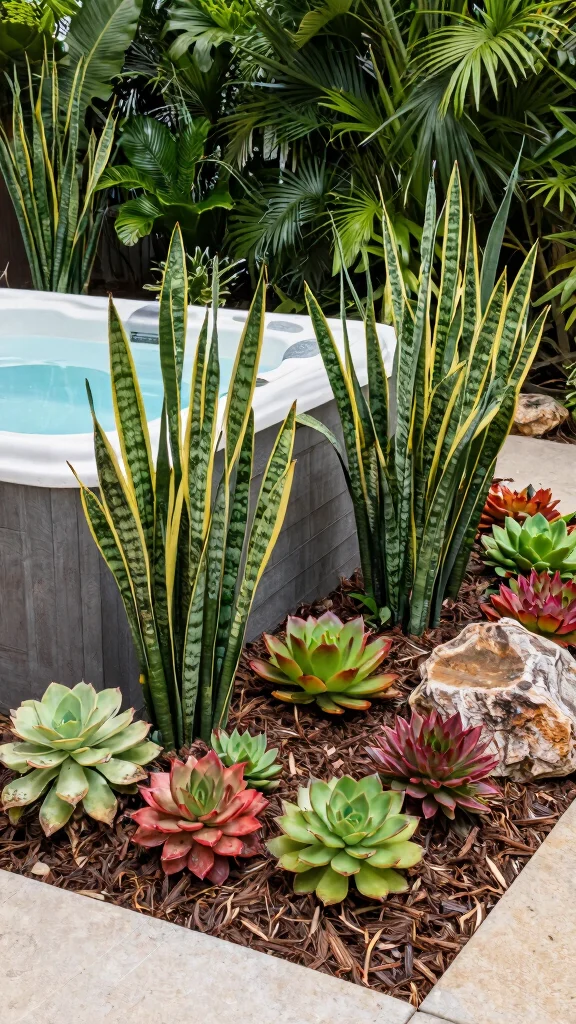
If you’re pressed for time but still want a beautiful landscape, low-maintenance plants are the answer. Hardy tropical plants, such as Snake Plants and ZZ Plants, thrive on minimal care and require little watering. These resilient varieties can adapt to different light levels, making them ideal for spots that don’t get full sun. Pair them with colorful succulents for a striking yet easy-to-care-for display around your hot tub.
Use mulch to conserve moisture and suppress weeds, making your garden care even simpler. Incorporating native plants can further reduce upkeep, as they naturally thrive in your local climate.
Tips for low-maintenance gardening:
– Use mulch to keep weeds away
– Plant native species for reduced care
– Group plants by water needs for convenience
This approach allows you to spend more time enjoying your hot tub instead of maintaining your garden.
6. Use Edible Plants for Functionality
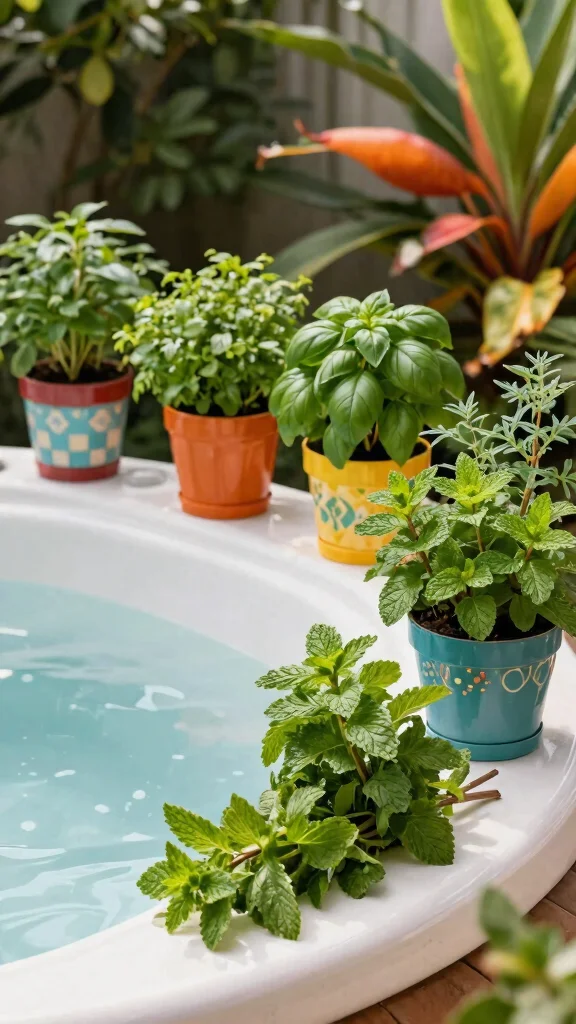
Incorporating edible plants into your hot tub landscaping can elevate your outdoor space. Herbs like Basil, Mint, and Lemongrass not only smell delightful but can also be used in your cooking and cocktails. Position these herbs in decorative planters near your hot tub for easy access while you unwind. Consider also growing fruiting plants like Pineapples or Papayas that thrive in tropical climates, providing fresh ingredients right from your garden.
Ensure your edible plants receive enough sunlight for optimal growth. This interactive element adds a unique touch to your garden experience, making it both functional and beautiful.
Ideas for edible gardening:
– Position herbs for easy harvesting
– Grow fruiting plants for fresh ingredients
– Create a portable herb garden for convenience
This combination of beauty and functionality will enhance your outdoor experience, providing delicious flavors at your fingertips.
7. Embrace Vertical Gardening
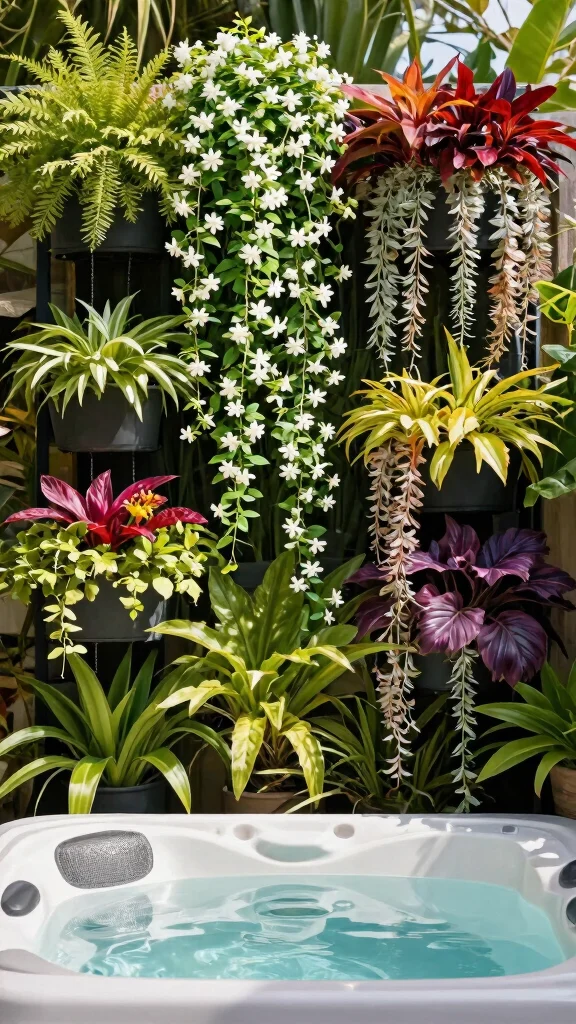
Maximizing your space with vertical gardening allows for more lush greenery in a compact area. Use wall planters, trellises, or DIY vertical gardens crafted from wooden pallets to create stunning displays. Climbing plants, like Jasmine or Passionflower, thrive in this setup, adding fragrance and beauty to your space. Vertical gardens not only beautify your area but also improve air circulation around your hot tub.
Choose plants that either climb or trail for varied visual effects. This method can also help filter noise, creating a more serene environment for relaxation.
Tips for vertical gardening:
– Select climbing plants for a beautiful display
– Incorporate trailing plants for added interest
– Use vibrant pots for a pop of color
This approach will transform your landscape into a lush green retreat, enhancing your outdoor experience.
8. Layer Plants for Depth
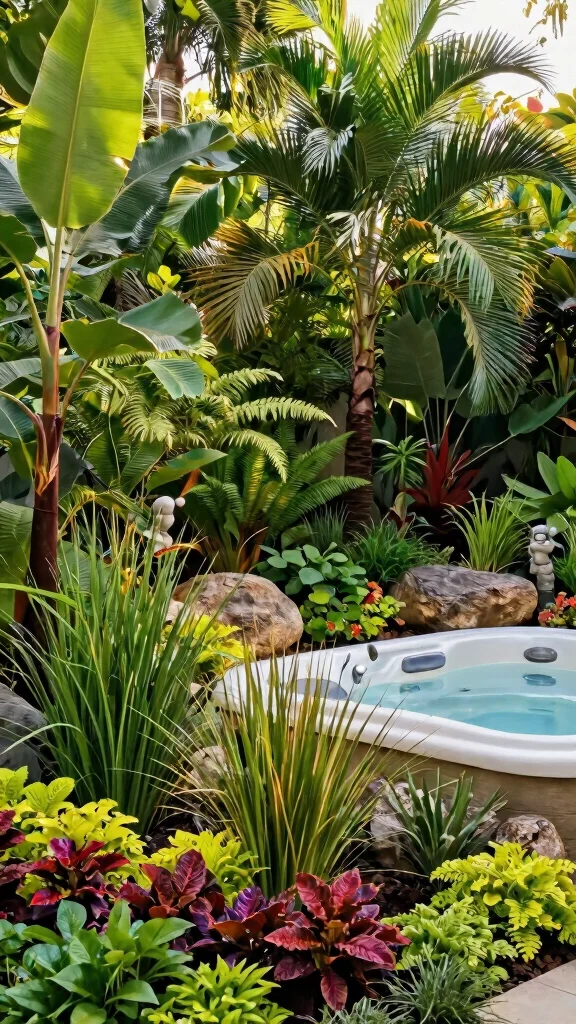
Layering different plant heights and types creates depth and visual interest in your hot tub landscaping. Start with shorter ground covers or ornamental grasses at the front, then progress to taller plants and trees in the back. This method mimics natural environments and adds a dynamic feel to your space. Consider colorful plant varieties, like Caladiums, for ground cover that adds visible splashes of color. Mixing textures, such as coarse and fine foliage, enhances the overall garden experience.
Use repetition of specific plants to create a cohesive theme throughout your landscape. Layering plants can also bolster privacy, making your hot tub area feel more enclosed.
Strategies for effective layering:
– Use varied heights for natural appeal
– Incorporate colorful ground covers for contrast
– Add sculptures or rocks for focal points
This thoughtful arrangement will create an inviting and lush environment, making every soak in your hot tub a delight.
9. Choose Durable Hardscaping Materials
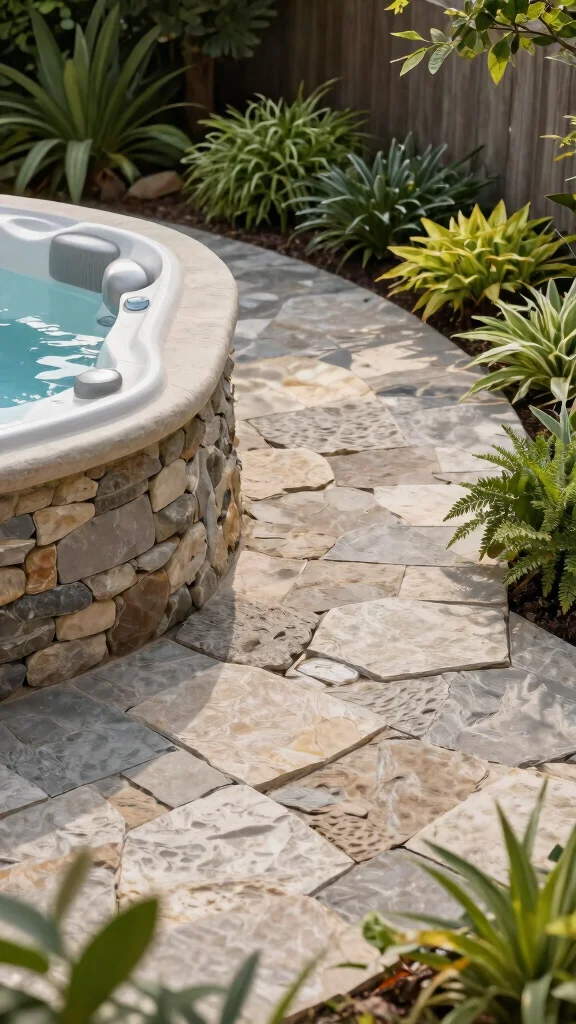
For your hot tub landscaping, selecting durable hardscaping materials is crucial. Choose options that can withstand humid conditions and are slip-resistant for safety. Natural stone, tile, or concrete are excellent choices that endure the elements while maintaining a beautiful look. Opt for textured stones or pavers that create a non-slip surface, perfectly complementing your tropical theme.
Lighter colors reflect heat, keeping surfaces cooler and more comfortable. High-quality hardscaping can also reduce maintenance costs over time, making it a smart investment.
Tips for selecting hardscaping materials:
– Choose slip-resistant surfaces for safety
– Opt for lighter colors for heat reflection
– Use decorative edging to define spaces
This careful selection will enhance both the beauty and functionality of your hot tub area, ensuring a safe and enjoyable experience.
Did you know that using textured stone or slip-resistant concrete can reduce slips in humid hot tub landscaping by up to 40%? Durable hardscaping materials like natural stone, tile, or concrete keep your tropical setup safe and cool, especially with lighter colors that reflect heat.
10. Optimize Lighting for Evening Ambiance
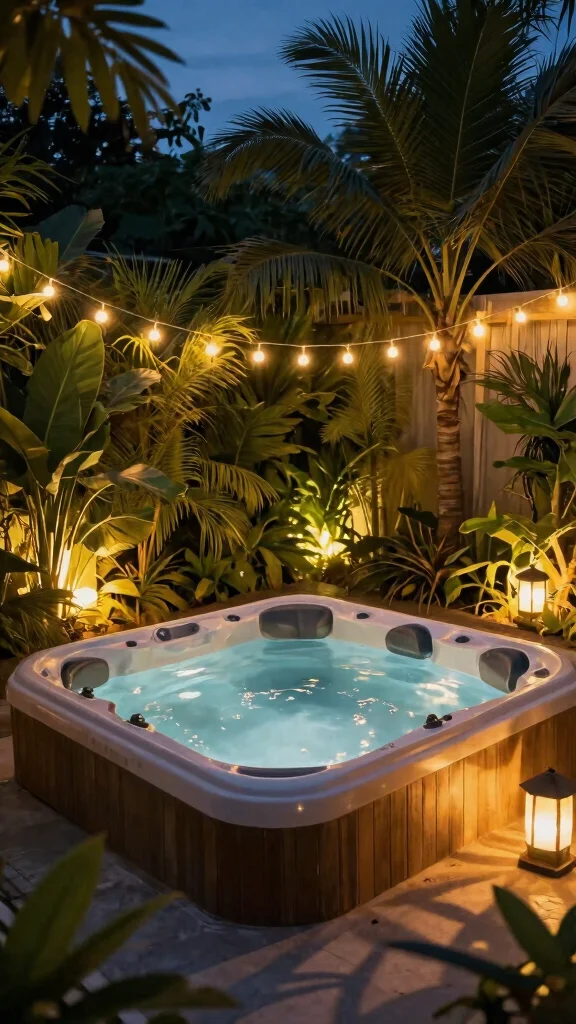
Creating the right atmosphere around your hot tub in the evening relies heavily on lighting choices. Soft, warm lights can create a cozy and inviting environment. Consider using solar lights, string lights, or lanterns to provide a magical glow without overshadowing the beauty of your plants. Placing lights at various heights—nestled among foliage or strung above—creates an enchanting effect.
Dimmable lights allow for adjustable ambiance, making it easy to set the mood. Proper lighting can also highlight specific plants, creating beautiful focal points in your landscape.
Ideas for optimizing lighting:
– Use dimmable options for flexibility
– Position lights to highlight focal plants
– Incorporate pathway lights for safety and accessibility
This thoughtful lighting approach will enhance your hot tub experience, allowing for enjoyable evenings under the stars.
Fun fact: dimmable LEDs use up to 80% less energy than standard bulbs while letting you tailor your hot tub landscaping glow. Place lights at varying heights for drama, and keep the overall vibe warm for evenings.
11. Regular Maintenance for Longevity
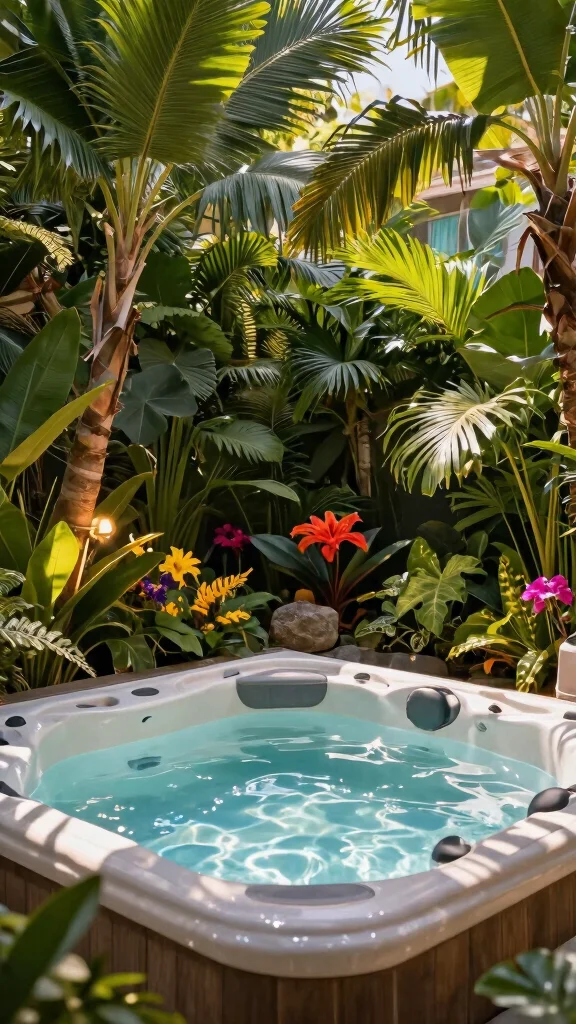
To keep your hot tub landscaping looking vibrant and inviting, regular maintenance is essential. Schedule routines for watering, pruning, and pest control to ensure plants remain healthy. Mulching helps retain soil moisture, while seasonal fertilizing keeps your plants thriving. Stay vigilant against weeds, as they can quickly overtake your space if left unchecked.
A well-maintained garden not only looks great but also contributes to a healthy ecosystem around your hot tub, providing the lush environment you desire.
Tips for effective maintenance:
– Create a maintenance calendar for organization
– Regular care prevents costly replacements
– Involve family for fun outdoor bonding
This consistent care will ensure your hot tub landscape remains a beautiful and relaxing oasis for years to come.
Conclusion
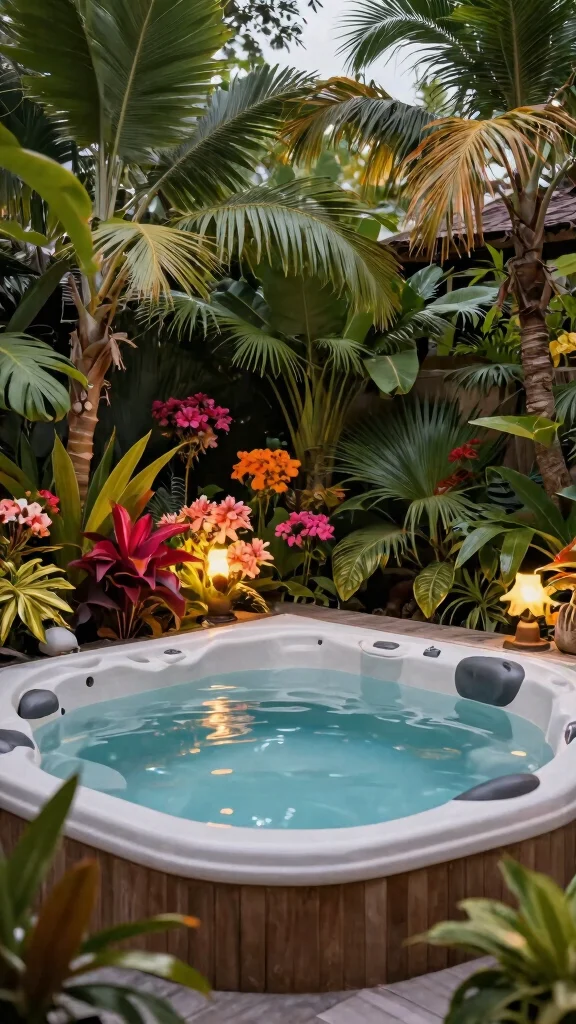
Landscaping around your hot tub is a creative way to enhance your outdoor aesthetics and build a personal paradise.
By carefully selecting and arranging tropical plants, you can set the stage for relaxation while also ensuring a visually stunning environment. From vibrant blooms to serene water features, each element plays a role in creating a truly special backyard oasis. Let these tips guide you in crafting a space that reflects your style and provides endless enjoyment!
Note: We aim to provide accurate product links, but some may occasionally expire or become unavailable. If this happens, please search directly on Amazon for the product or a suitable alternative.
This post contains Amazon affiliate links, meaning we may earn a small commission if you purchase through our links, at no extra cost to you.
Frequently Asked Questions
Which tropical plants are ideal for hot tub landscaping to create a lush backyard oasis?
For hot tub landscaping, pick tropicals that love humidity, heat, and occasional splashes. Try bird of paradise, hibiscus, monstera, bromeliads, calatheas, and ferns. Place them in sheltered spots with filtered sun and well-draining soil. Use containers or raised beds near the deck to control soil and minimize splash damage. Group tall varieties at the back, mid-height accents in the middle, and low groundcovers in front to create depth while keeping paths clear. This layout complements garden design and enhances outdoor aesthetics, turning the area into a cozy backyard oasis for hot tub landscaping.
How should I choose plants around a hot tub to handle moisture, heat, and splashing water?
Focus on moisture-tolerant tropicals that handle humidity and splashes, such as bromeliads, calatheas (with filtered sun), philodendrons, monstera, and areca palm. Place them in sheltered, semi-shaded spots with well-draining soil. Consider using container plants on the deck to protect tub surfaces and simplify maintenance. Use a drip system or misting to keep soil evenly moist without overwatering. Keep walkways clear and use vertical accents or screens to balance garden design, outdoor aesthetics, and landscape maintenance needs around your hot tub landscaping plan.
What garden design ideas maximize safety and aesthetics in hot tub landscaping?
Start with a non-slip, durable deck surface and incorporate privacy screens or vertical greenery to soften edges. Create three plant layers: tall tropicals as a backdrop, medium-height accents in the middle, and low groundcovers at the front for erosion control. Use fragrant varieties near seating for ambiance, and color accents that complement your deck. Add low-voltage lighting to highlight focal plants and ensure safe nighttime access. This approach blends garden design principles with practical outdoor aesthetics and keeps your backyard oasis inviting around hot tub landscaping.
What maintenance routines keep tropical plantings thriving around a hot tub?
Keep plantings healthy with a simple, repeatable routine: prune branches that overhang the tub or shed leaves on decking to prevent buildup, inspect for pests and diseases, and remove any diseased foliage promptly. Feed tropicals with a balanced fertilizer in spring and mid-summer, and water deeply but avoid soggy roots. Mulch to retain moisture and regulate soil temperature, and winterize or protect container plants in colder climates. Regular tidy-ups ensure landscape maintenance stays manageable while preserving the beauty of your hot tub landscaping.
Are there beginner-friendly tropical plants that perform well in hot tub landscaping?
Absolutely. Start with low-stress favorites like Areca palm, Bird of Paradise, Hibiscus, Monstera deliciosa, Bromeliads, Philodendron, and Peace Lily. These typically adapt well to containers or beds, tolerate humidity, and handle some splash. Place them in bright, indirect light (or partial sun where appropriate) and use containers for easy mobility and plant selection control. With simple care, these beginner-friendly tropicals can quickly become the centerpiece of your hot tub landscaping and backyard oasis.
Related Topics
hot tub landscaping
tropical plants
garden design
outdoor aesthetics
backyard oasis
landscape maintenance
plant selection
easy landscaping
seasonal greenery
DIY garden tips
beginner friendly
lush landscaping